


We’ve painted our lips with it. Empires were conquered for it. Priceless art was destroyed because of it. Red is the oldest color story ever told - and today, we’re telling it. This post is diving into the history of red: from empires built on bug’s blood to that little red room Matisse couldn’t get enough of.
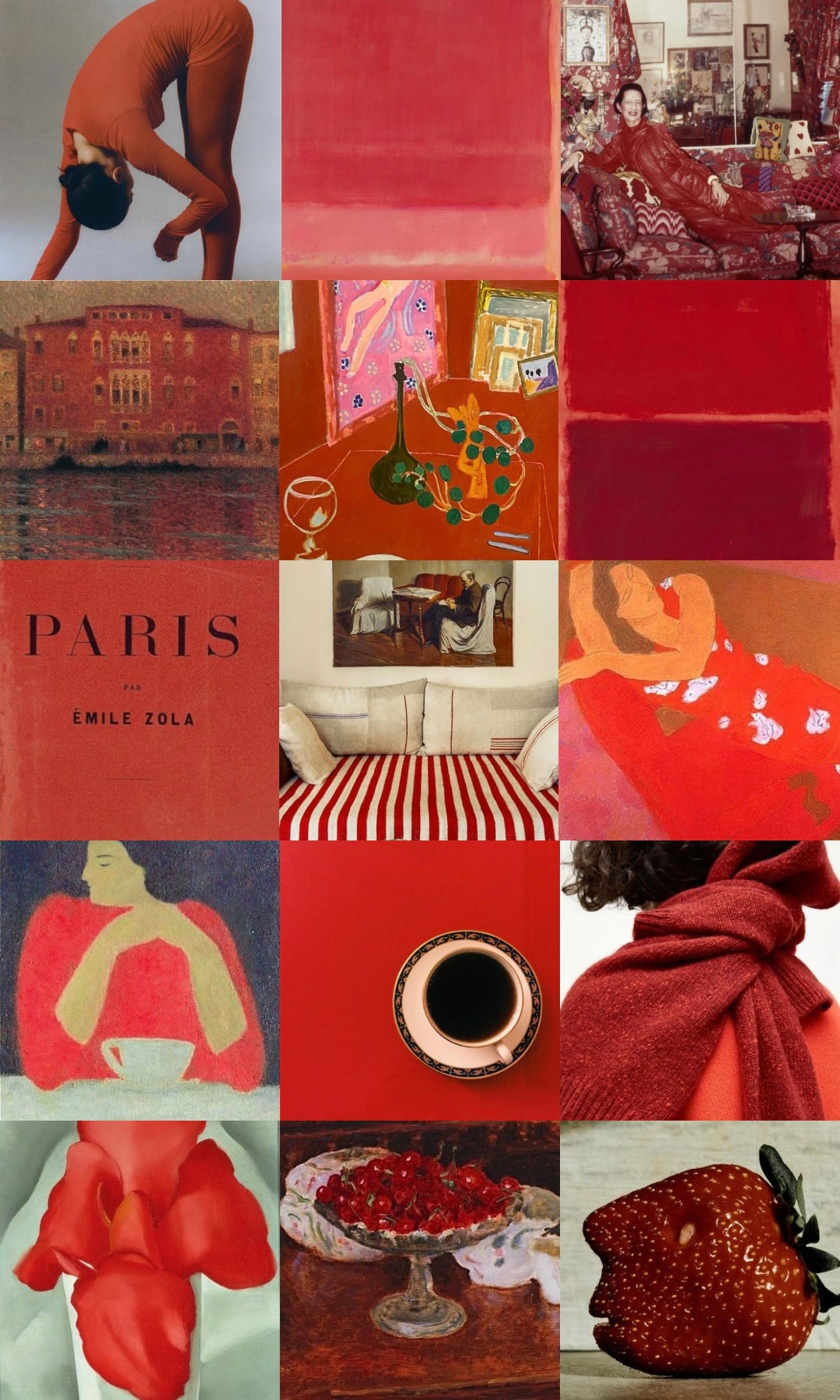
If you want to make a statement, do it with red. Louboutin’s signature heel. Diane Vreeland’s “Garden in Hell” apartment. Georgia O’Keefe’s blooms. It’s a trick as old as time - because red is our world’s very first color.
Today we’re diving into the secret history of red (!)…from mysterious Pompeii villas to empires dyed in bugs’ blood and a painting intense enough to cause violence.
Keep scrolling for guest red picks by Jess Graves, Sprezza, somsack sikhounmuong, Jane Herman, Katie Stone, emily north, Daise Bedolla - and comment your favorite red pick after this!
P.S. after you’ve painted red, read about more secret color histories here:


WHEN DID THE RED CONQUEST BEGIN?
Let’s rewind. Before Matisse’s Red Room, before Diane Vreeland’s scarlet salon, before Valentino claimed an entire shade, humans were already obsessed with red.
Why? It’s primal. Besides black and white, red is the first color babies see - and the first color humans had a word for.
It’s not a designer invention; it’s literally the earth itself. Red ochre was the first pigment we ever dug up - smeared on bodies more than 300,000 years ago, and painted as bison on cave walls over 40,000 years ago.
Red came first - and guess what - it never left. We’ll break down the history of the world’s loudest color into the three pigments (and the iconic works) that changed everything.
1. VERMILION: the prince of reds
Take a bow - you’re meeting pigment royalty. Vermilion: the brilliant red of the ancient world - worth its weight in gold - and chased no matter the cost.
Back it up: Vermilion has been dazzling - and dangerous(!) - for centuries. It’s made from a natural mineral called cinnabar (a brilliant but VERY toxic red). Chinese alchemists mastered it as early as the 2nd millennium BCE.
Brighter than ochre, rarer than most pigments, and deadly to mine - naturally, everyone wanted it MORE. Vermilion lit up Chinese lacquerware, ancient frescoes, and medieval manuscripts.
By the time it reached ancient Rome, it was as costly as gold (second only to ultramarine).
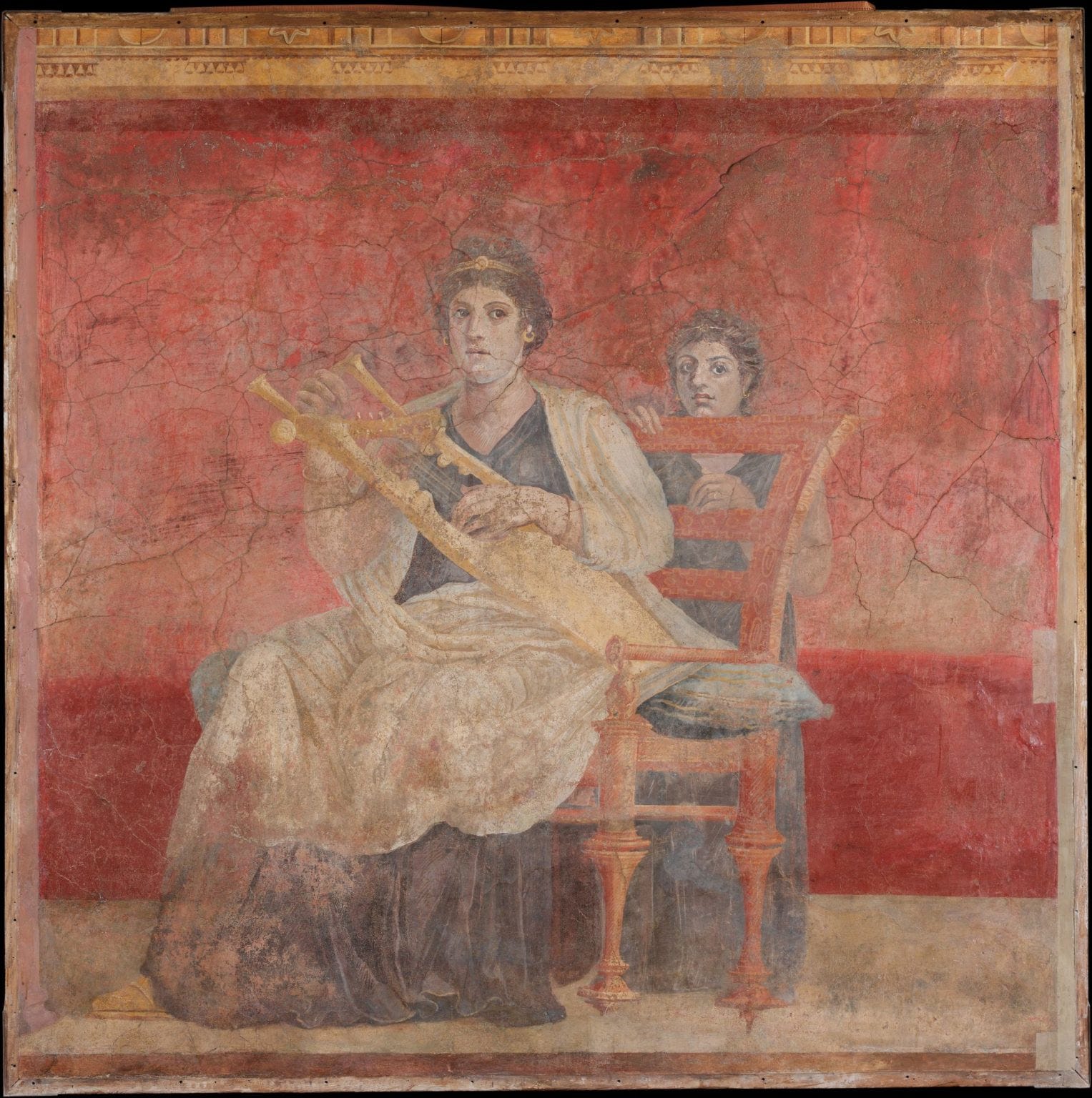
Costly and with looks that could kill? The Romans said yes please! Their massive cinnabar mine in Spain was sooooo toxic many (enslaved) workers never made it out alive. Still, they smeared it on walls, statues, triumphal parades - even cosmetics.
And our best evidence? A Pompeii fresco…
Villa of the Mysteries in Pompeii (c. 1st century BCE/CE).
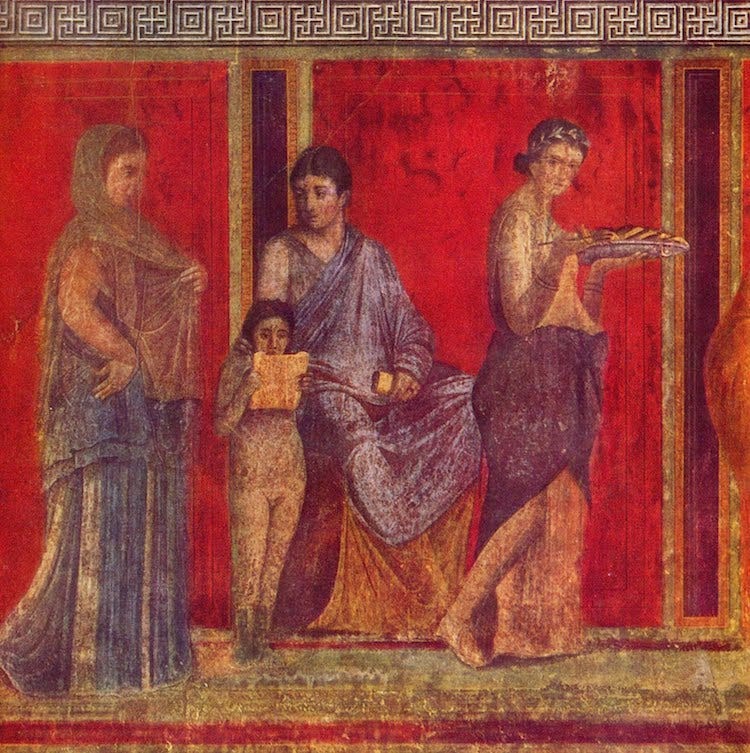
In 1909, archaeologists struck gold (or shall we say red) outside Pompeii: a villa sealed since 79 BCE. The craziest part = what was inside: a fresco blazing in red-hot vermilion.
It was so magical they called it the Villa of Mysteries - and you can still see it today. Why shall we care? It’s proof the Romans had an eye for design: if they used red, it had to be the best. Deadly, costly…unbeatable.
Synthetic vermilion enters the medieval chat….
Although Ancient Chinese alchemists cracked the recipe for synthetic vermilion (cleaner! cheaper! more accessible), Europe didn’t rediscover it until the 9th century.
By the Renaissance, it was the crown jewel of the palette - beloved by the Old Masters. Here’s one of my favorite paintings that uses it:
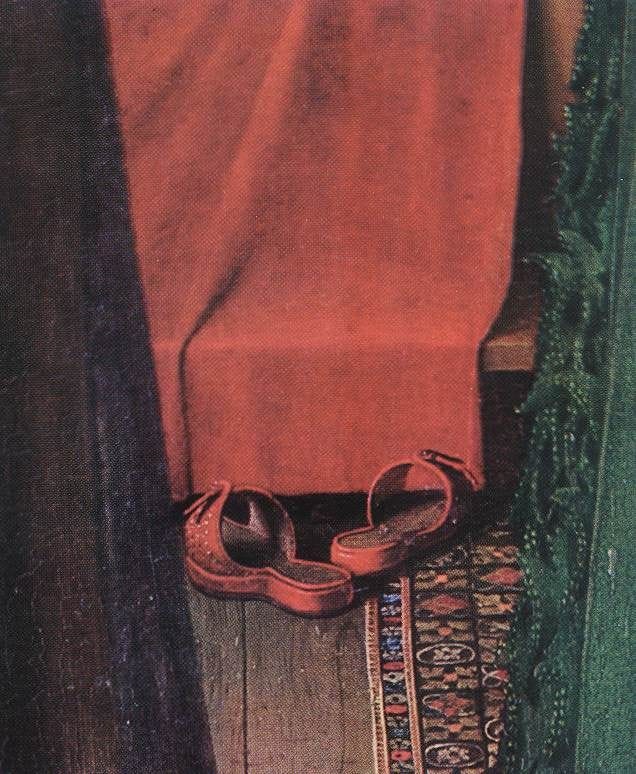
Jan van Eyck, Arnolfini Portrait (1434, National Gallery, London)

The Arnolfini Portrait is one of the most intriguing paintings in art history. Do you know this couple? What’s going on in that strange little room? Who’s in the mirror?!
There are endless ways to analyze it, but for our purposes, let’s zero in on the ~status symbols~. This couple is RICH rich. The lapdog (a prized breed), the fur-trimmed clothes, the fancy brass chandelier.
But the real luxury is in the paint itself. That ultramarine blue = ground from lapis lazuli hauled in from Afghanistan. That blazing red vermilion = as costly as gold.
We could study this painting’s mysteries forever, but the Arnolfini Portrait is also a portrait of wealth - and van Eyck knew exactly which pigments to use to flaunt it.
Vermeer is another master known for his use of lavish pigments:
Vermeer’s Girl with the Red Hat (1665–1666), National Gallery of Art, Washington, D.C.
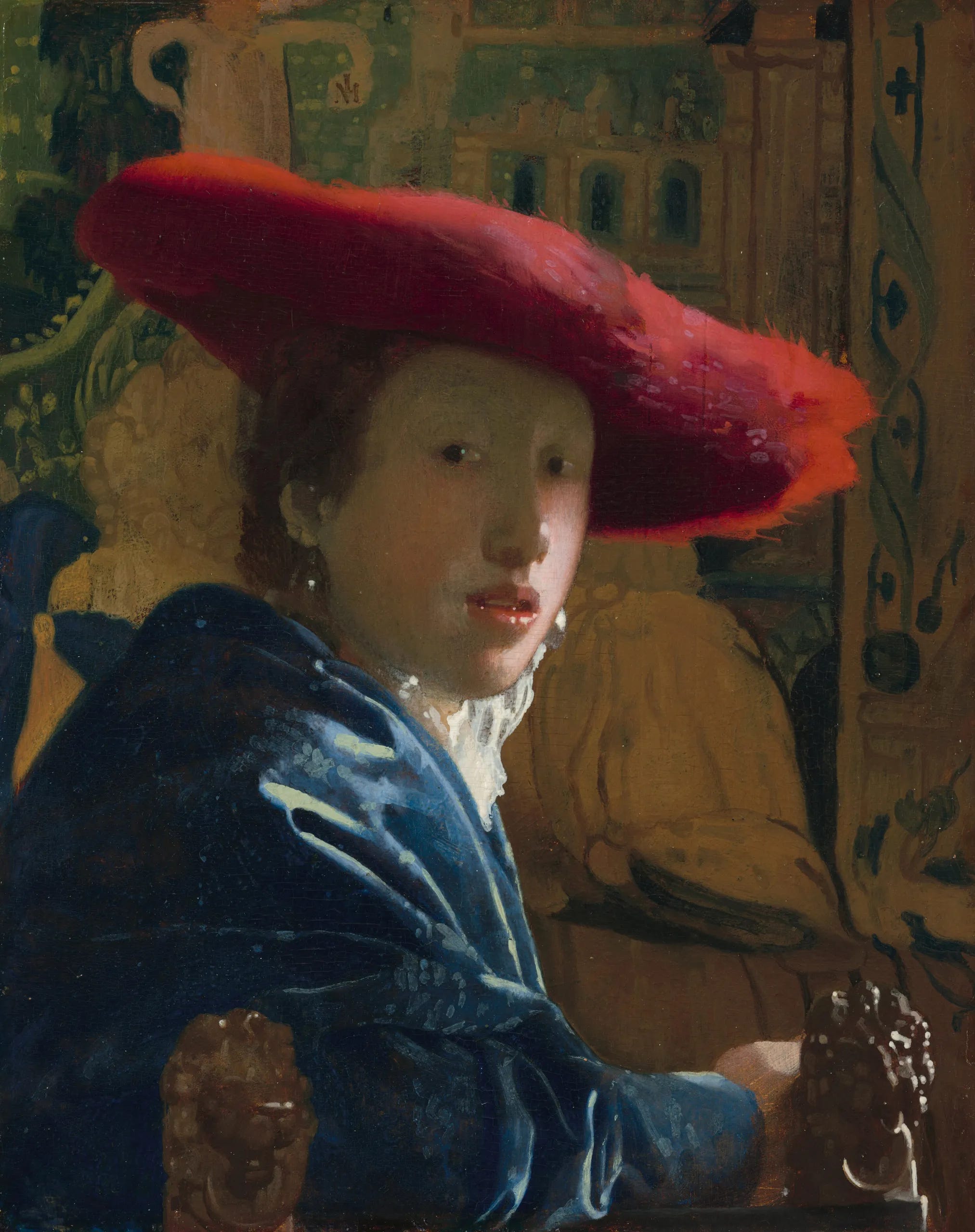
With Vermeer’s jewel-box paintings, every pigment is intentional. Even more so in this one - Girl with the Red Hat is one of his smallest works, and red steals the show. Its glow = from a thin layer of pricey vermilion.
Vermeer was known for splurging on expensive pigments that eventually drove his family into debt (hello, lapis lazuli) - and this painting is no different (sorry fam! He had to do it for the red).
And the girl?! Art historians agree that this isn’t a portrait but a tronie - a stock type, not a specific person. He painted a milkmaid, a lacemaker, a pearl-earringed girl.
Which leaves us here: who is she? She’s just a girl who wants to be noticed in her red hat. And don’t we all know someone like that? Aren’t we all, in some way, just a girl in a hat, hoping to be seen?
Vermilion once reigned as the Old Masters’ red of choice - but by the 20th century, its toxicity was impossible to ignore. Painters finally moved on to safer reds - among them the natural pigment, cochineal.
2. COCHINEAL: the secret bug that built empires
Does bugs’ blood strike your fancy? It certainly does strike ours - that’s exactly how the next iconic red was made. The shade behind ancient textiles, lipstick, and cherry Coke. It’s dazzling! It’s fleeting. It’s everywhere. Drumroll, please…for cochineal.
